
Maintaining healthy turf on a commercial property isn’t an optional accessory. It is a strategic investment. Whether you manage an HOA, multifamily community, retail center, medical campus, office park, or municipal site, the outdoor appearance is the first thing tenants, guests, and residents notice.
A clean, green, healthy lawn communicates professionalism, safety, pride of ownership, and long-term property value. A patchy, weed-ridden lawn communicates the opposite.
Here in Middle Tennessee, turf faces a unique set of challenges: unpredictable weather swings, compacted soils, heavy foot traffic, high summer heat, and the constant need for consistent care. Many property managers call us at Puryear Farms, unsure where to start. They simply know:
- “The lawn looks bad.”
- “The fescue isn’t surviving.”
- “We’re getting complaints from board members or tenants.”
- “The builder put down Bermuda, and we don’t know how to care for it.”
- “We don’t even know what type of grass this is.”
This guide breaks down everything you need to know about turf care in Gallatin, TN; how we do it; why it matters; and what to expect from a professional, process-driven commercial maintenance partner like Puryear Farms.
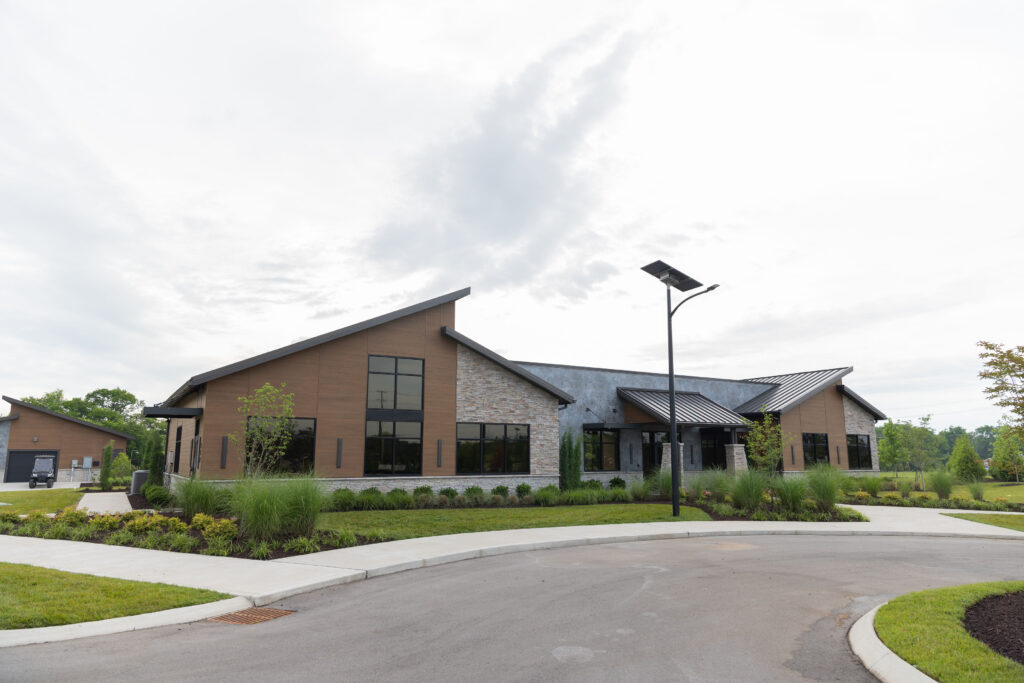
Why Turf Care Matters for Commercial Properties
When commercial turf declines, property value declines with it. Dead spots, thinning areas, and weeds don’t just look bad; they signal to visitors that the site isn’t being properly managed.
For HOAs, this leads to board frustration.
For retail centers, it affects foot traffic and leasing.
For apartment communities, it affects resident satisfaction.
For office campuses, it affects professionalism and perceived safety.
Commercial turf maintenance is not as simple as “fertilize a few times a year.” It requires:
- Consistent timing
- A deep understanding of local turf types
- Proper mowing practices
- Strategic seasonal adjustments
- Knowledge of Tennessee’s weed pressures
- Awareness of soil health and compaction
- Planning around weather shifts and drought conditions
In fact, many fescue properties require seasonal revitalization to recover from summer stress. Our guide on aeration and overseeding in Tennessee explains how and why this works.
Understanding the Turf Types Used in Gallatin, TN
Most commercial property managers don’t know (and don’t need to know) what turf type they have. That’s what our team handles. But turf type does matter because each requires a different program.
1. Tall Fescue (Most Common)
Tall fescue is the dominant turf type across Middle Tennessee. It is cool-season. This means:
- It looks best in spring and fall.
- It struggles in heat and heavy drought.
- It can thin out quickly in high-traffic common areas.
- It often requires annual overseeding to stay dense.
Most of the calls we receive are related to fescue stress: patchiness, weeds breaking through, or thinning after a hot summer.
2. Bermuda (Increasing on Newer Development)
Builders and developers are turning to Bermuda for three main reasons:
- It requires less water once established.
- It thrives in full sun and high heat.
- It spreads aggressively, helping bare spots fill in naturally.
However, Bermuda needs a different fertilization and weed-control approach from fescue, especially during transition seasons.
3. Zoysia
Zoysia is less common but increasing in popularity. It behaves similarly to Bermuda in terms of mowing, fertilization, and seasonal cycles. Because its growth pattern is similar, Bermuda and Zoysia follow nearly identical treatment strategies in our commercial turf programs.
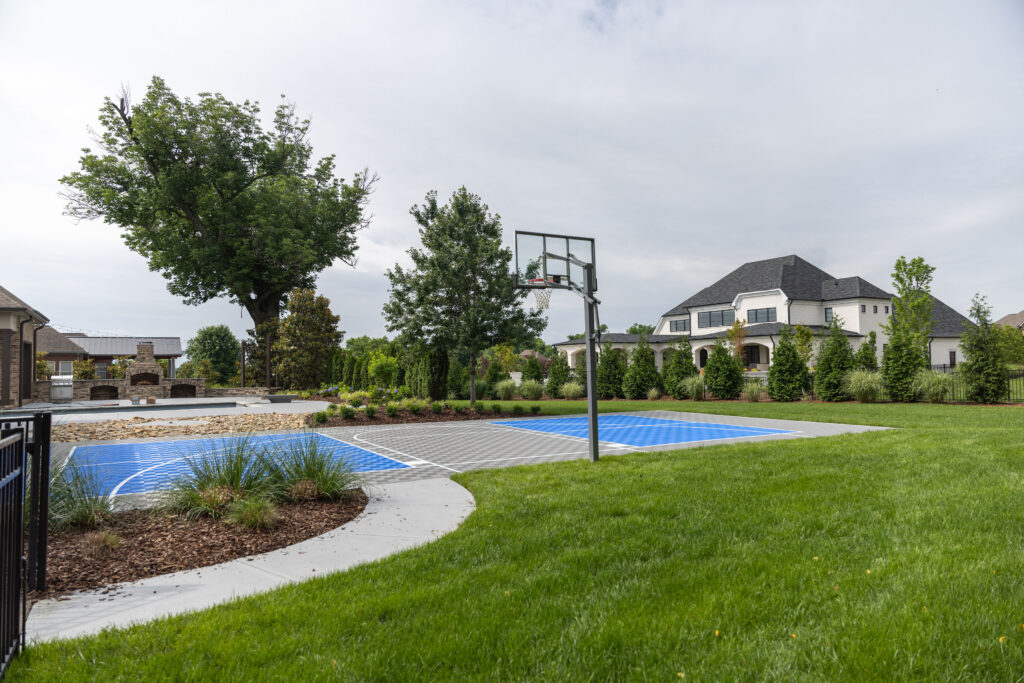
Why Commercial Turf Care Isn’t One-Size-Fits-All
Puryear Farms runs a predictable commercial program; however, we still adjust treatments based on:
- The year’s weather
- Weed pressures such as Dallas grass and crabgrass
- Soil conditions
- Moisture levels
- Property usage
- Sun versus shade
Our technicians mix what we call “cocktails,” a professionally balanced combination of treatments informed by property conditions and regional trends.
This means treatments may change between:
- Liquid or granular
- Pre-emergent or post-emergent
- Various fertilizer blends
The program itself stays structured, so your property receives consistent results.
For properties that need deeper restoration, we may pair your program with turf rejuvenation.
What’s Included in Puryear Farms’ Commercial Turf Healthcare Program
1. Six Strategic Applications Per Year — Timed to Tennessee’s Growing Season
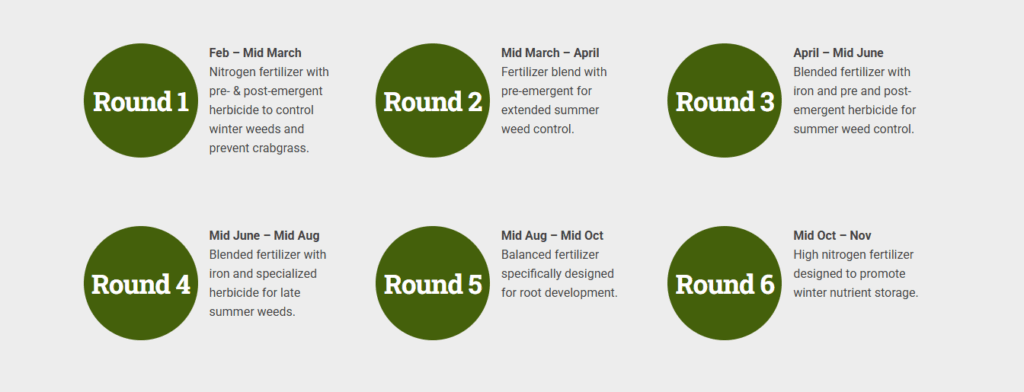
Whether your property has fescue, Bermuda, or Zoysia, our turf program includes six annual applications planned around Tennessee’s seasons and turf behavior.
Here’s when treatments happen and why:
Round 1: February – Mid March
Nitrogen fertilizer with pre- and post-emergent herbicide to control winter weeds and prevent crabgrass before it germinates.
Round 2: Mid March – April
Fertilizer blend with pre-emergent for extended summer weed control as turf enters its spring growth phase.
Round 3: April – Mid June
Blended fertilizer with iron and pre- and post-emergent herbicide for summer weed control as heat pressure increases.
Round 4: Mid June – Mid August
Blended fertilizer with iron and specialized herbicide for late summer weeds during peak stress periods.
Round 5: Mid August – Mid October
Balanced fertilizer specifically designed for root development as turf transitions into fall recovery mode.
Round 6: Mid October – November
High nitrogen fertilizer designed to promote winter nutrient storage, strengthening turf for dormancy and spring green-up.
Each application is calibrated to what your turf needs at that moment—not a generic schedule copied from a textbook.
2. Weed Control
Weed pressure varies every year. Our program controls the most common Tennessee weeds. Some weeds may require additional specialty treatments. In those cases:
If your turf has specific challenges, we develop a targeted plan for it.
3. Pest Monitoring and Add-On Treatments
Some issues, such as grubs or nutsedge, require separate treatments. Because not every property needs these, we provide them as optional services when appropriate.
4. Proper Mowing Practices
Healthy turf depends heavily on proper mowing height and frequency.
As a baseline:
- Fescue requires 34 mowings per season.
- Bermuda requires 30 to 32 mowings per season.
- Zoysia is similar to Bermuda.
Improper mowing can undo the benefits of your turf program.
How You Know We Were There
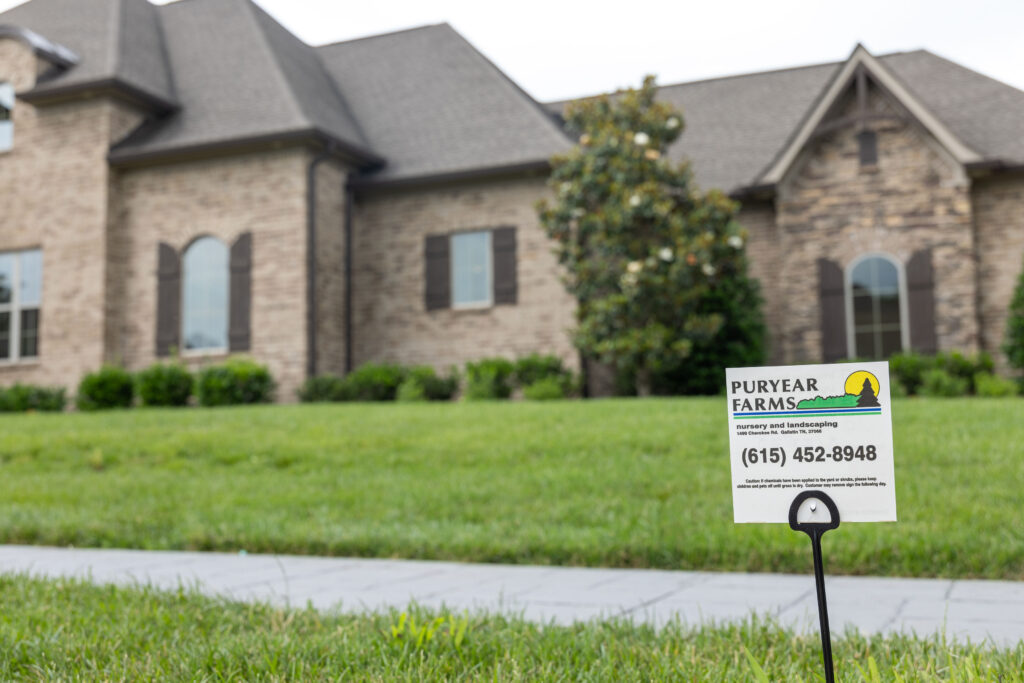
After every turf treatment, Puryear Farms places a notice on the property. This is a legal requirement and serves as a clear indicator for HOA boards, tenants, and residents.
What Makes Puryear Farms the Right Choice for Commercial Turf Care
1. Communication
Property managers consistently tell us that communication is their top priority. We deliver:
- Fast quotes, usually within 24 to 48 hours
- Responsive account managers
- Consistent scheduling
- Clear expectations
2. Planning
We are a process-driven company. Commercial sites need consistency, not customization. Our structured programs deliver:
- Predictable results
- Predictable scheduling
- Predictable budgets
3. Experience With HOAs, Retail, and Commercial Sites
We understand:
- Board dynamics
- Tenant expectations
- Budget cycles
- Oversight
- The importance of curb appeal
4. A Full Maintenance Partner
Your turf program integrates with full-service landscape care, irrigation, seasonal services, and more.
What a Healthy Turf Program Achieves
When your turf is maintained professionally and consistently, you can expect:
- A more uniform appearance
- Fewer weeds
- Greater tenant and resident satisfaction
- Improved property value
- Stronger root systems
- Better drought resilience
- Reduced erosion
- Lower long-term maintenance costs
Annual support services such as aeration and overseeding and turf rejuvenation
Here’s What Happens Next:
Step 1: Request a Turf Assessment
We’ll walk your property, identify your turf type, assess current conditions, and flag any problem areas like compaction, drainage issues, or weed pressure.
Step 2: We Recommend a Soil Test (Optional but Highly Recommended)
Think of it as a blood test for your lawn. A soil test tells us exactly what your turf needs—and what it doesn’t. This eliminates guesswork and prevents wasted applications. Learn more about why soil testing matters here: Soil Testing and Amendments: The Blood Test for Your Lawn
Step 3: Receive Your Custom Turf Care Plan
Within 24–48 hours, you’ll receive a clear proposal outlining the six-round program, timing, any recommended add-ons (like aeration or specialty weed treatments), and transparent pricing.
Step 4: We Get to Work
Once approved, we’ll schedule your first application and begin delivering consistent, predictable results year-round.
Contact us today to schedule your free turf assessment.
Frequently Asked Questions
“Can we reduce the number of turf applications?”
This is not recommended. Commercial turf requires full-season consistency.
“What if specialty weeds appear?”
We will diagnose the issue and recommend the proper add-on treatment.
“Is turf care included in full landscape maintenance?”
Many clients bundle turf care with full maintenance.
Healthy turf requires consistent care, smart planning, and a partner who understands the needs of commercial properties in Middle Tennessee. Your outdoor spaces are a major visual asset. When they look good, the entire property looks good.
Ready to Improve Your Commercial Property’s Turf?
Puryear Farms provides reliable, process-driven turf care programs built for the Middle Tennessee climate and the needs of HOAs, retail centers, offices, and communities