
Why Winter Is the Smartest Time to Prune
In Middle Tennessee, winters are mild and workable with only the occasional freeze, which makes them the perfect window to give your plants the attention they deserve.
According to the Tennessee State Climate Summary,
“For most of the state, summers are warm and humid, while winters are cool with occasional episodes of very cold arctic air.”
Those “cool with occasional cold” conditions create the ideal balance for pruning — not too harsh for crews to work, and not too warm to trigger new plant growth. From November through February, most plants enter dormancy, slowing down their growth and conserving energy below ground.
That dormancy is your opportunity.
Winter pruning allows our crews to shape, correct, and rejuvenate plants while they’re “asleep,” so they come back stronger in spring. It’s one of the most beneficial services you can schedule, yet one many homeowners skip until it’s too late.
If you wait for spring, you risk cutting off buds that would’ve bloomed, or you’ll spend the season playing catch-up with overgrown shrubs and tangled branches.
What Is Winter Pruning, Really?
Winter pruning (sometimes called dormant pruning) means trimming trees and shrubs after they’ve entered dormancy — typically between November and February in Tennessee.
During this time, there’s no active growth, so pruning doesn’t stress the plant. Cuts heal more cleanly, disease risk is lower, and the plant’s energy can focus on new spring growth rather than repairing damage.
We call it winter pruning because that’s how our homeowners understand it, but the science behind it is all about working with nature’s rest cycle, not against it.
For general pruning guidance, check out our post:
👉 Don’t Murder the Myrtle: A Fun Guide to Proper Pruning
Which Plants Benefit Most From Winter Pruning
Middle Tennessee landscapes are full of plants that love a good winter haircut. Here’s a look at the most common ones:
1. Small Trees and Crape Myrtles (Under 12 ft)
- Re-shape overgrown canopies and remove low limbs that interfere with mowing or walkways.
- Correct past pruning mistakes (yes, even “crape murder”).
- Promote stronger structure and healthier branching.
2. Flowering Shrubs (Hydrangeas, Roses, Spireas, etc.)
- Prune hydrangeas that bloom on new wood, like ‘Endless Summer’ varieties, in late winter to boost next year’s blooms.
- Remove crossing or dead canes on roses and rejuvenate older wood.
3. Evergreen Shrubs (Boxwood, Holly, Ligustrum)
- Light shaping helps maintain symmetry without damaging spring growth.
- Removes interior dieback and opens airflow through dense foliage.
4. Shade and Ornamental Trees (Japanese Maple, Dogwood, Redbud)
- Prune while leaves are off to see the structure clearly and prevent rubbing branches.
- Reduces storm damage by removing weak or overextended limbs.
For more about selecting and maintaining trees in Tennessee, see:
Understanding Nursery Stock Sizes: A Guide for Homeowners in Tennessee

How Puryear Farms Handles Winter Pruning: A Behind-the-Scenes Look
Our pruning crews are trained to treat every property as if it were their own. Here’s how we do it:
- Consult & Tag:
Before we start, we walk your property with you or your account manager. Any plants you don’t want touched are tagged clearly so our team knows to skip them. - Clean Equipment:
We sanitize tools between jobs (and as needed on site) to prevent spreading disease. - Proper Technique:
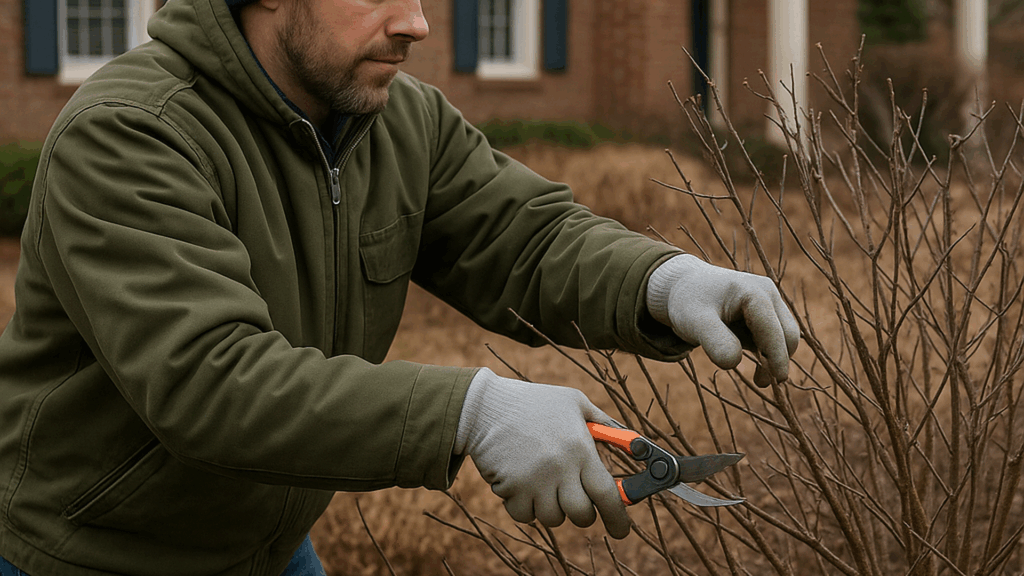
Hydrangeas are pruned with hand pruners, not chainsaws. Every species has its own rhythm and method. We follow horticultural best practices for clean, angled cuts that encourage natural growth. - Safe Height Work:
We specialize in pruning trees and shrubs under 12 feet tall, where the work can be done safely and precisely from the ground or a short ladder. - Debris Removal:
All trimmings and cuttings are hauled away to be composted & never left behind in your beds or curbside.
It’s a careful, detail-oriented process designed for long-term plant health, not just appearance.
Common Mistakes Homeowners Make While Pruning
Even well-intentioned DIYers can cause lasting damage if they don’t know the timing or technique. Some of the most common missteps we see include:
- Over-pruning: Removing too much top growth at once (“crape murder”) weakens plants and ruins their natural form.
- Using dull or dirty tools: This spreads disease and leaves ragged cuts that take longer to heal.
- Pruning too early: If plants aren’t fully dormant, you risk triggering tender new growth that will freeze.
- Pruning too late: You might snip off next season’s blooms.
If you’re ever unsure, your best resource is your account manager. You can also explore our blog library for seasonal care tips written by our team.
Why Some Homeowners Skip Winter Pruning — and Why They Shouldn’t
We get it. When everything’s bare and quiet outside, pruning might not seem urgent. Many people think they can “get by” until spring.
Here’s what really happens when you skip it:
- You fall behind. Without a winter prune, spring becomes a race to correct overgrowth and reshape shrubs.
- You lose blooms. Improper timing cuts off buds that should’ve flowered.
- You invite disease. Dead or damaged wood left over winter can harbor fungus or insects.
- Your landscape looks tired. Daylily stalks, browned hydrangeas, and straggly crape myrtles stay visible all season.
As our team often says:
“Skipping winter pruning means you’re always playing catch-up come spring.”
The Payoff: Healthier, Happier Plants All Year Long
A proper winter pruning helps plants:
- Channel energy into new growth
- Produce fuller blooms
- Maintain shape and proportion to nearby features
- Stay resilient against weather and pests
It’s the simplest way to make your spring look spectacular without scrambling in April.
For homeowners planning to refresh their landscape design or install spring color afterward, winter pruning is the natural first step.
The Early Bird Gets the Bloom: Order Your Spring Flowers Today
Winter Pruning in Tennessee Pricing & How to Schedule
Every property is unique, so winter pruning is priced by job — based on time, plant size, and complexity. The initial consultation is free, and there’s no obligation to move forward.
After your walkthrough, our team will send a customized estimate and schedule your service during the ideal pruning window.
Tip: November through February fills up fast — especially for clients with mature landscapes or extensive plantings.
Ready to Schedule Your Winter Pruning?
Healthy plants, cleaner beds, and a spring that starts ahead, that’s what winter pruning delivers.
If it’s been more than a year since your last full prune, or if you’re unsure which plants need it, let’s take a look together.
Schedule your free winter pruning consultation with Puryear Farms today.