
Core aeration and liquid aeration are both designed to improve lawn health, but they improve the soil in different ways. Understanding those differences can help you choose the right solution for your lawn.
If you’ve been comparing core aeration vs. liquid aeration, you may be wondering whether one method is more effective than the other. While both aim to create better growing conditions for grass, they work very differently. Core aeration physically removes plugs of soil to relieve compaction, while liquid aeration uses soil-conditioning products to improve water movement and soil structure.
For many lawns in Middle Tennessee, compacted soil is one of the biggest barriers to healthy grass. Clay-heavy soils, frequent foot traffic, and regular mowing can all limit the flow of water, oxygen, and nutrients to the root system.
In this guide, you’ll learn how core aeration and liquid aeration compare, when lawn aeration is necessary, and why Puryear Farms recommends core aeration to help build stronger, healthier lawns.
What Is Core Aeration?
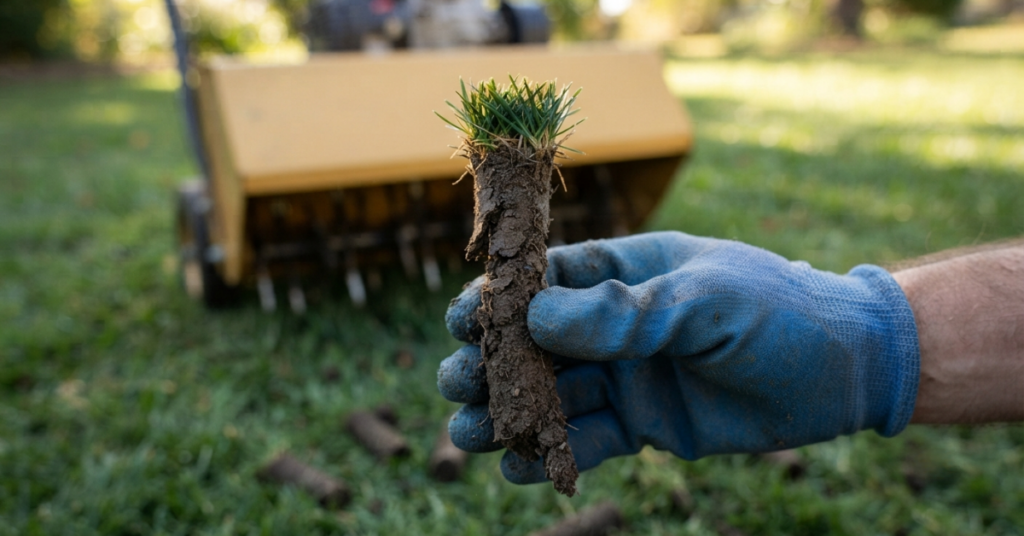
Core aeration removes small plugs of soil from your lawn to relieve soil compaction and allow water, oxygen, and nutrients to reach the root zone.
Lawncare professionals use hollow tines to pull small plugs, or “cores,” from the soil as it moves across your lawn. Removing these plugs creates openings that improve the movement of air, water, and nutrients below the surface, where grass roots need them most. Core aeration leaves small soil plugs on the lawn, where they naturally break down and add organic matter back into the soil.
Core aeration provides several important benefits for your lawn, including:
- Relieving soil compaction so roots have more room to grow
- Improving root development for stronger, more resilient grass
- Increasing water infiltration to reduce runoff and help moisture reach the root zone
- Allowing fertilizer and other nutrients to penetrate deeper into the soil
- Encouraging thicker, healthier turf over time
As compaction increases, your grass may get thin, stressed, or discolored. In fact, compacted soil is one of several factors that can contribute to brown turf, particularly during periods of heat or drought.
By creating space below the surface, core aeration helps improve growing conditions where it matters most. When combined with a healthy lawn care program, it gives your grass a stronger foundation for long-term growth.
What Is Liquid Aeration?
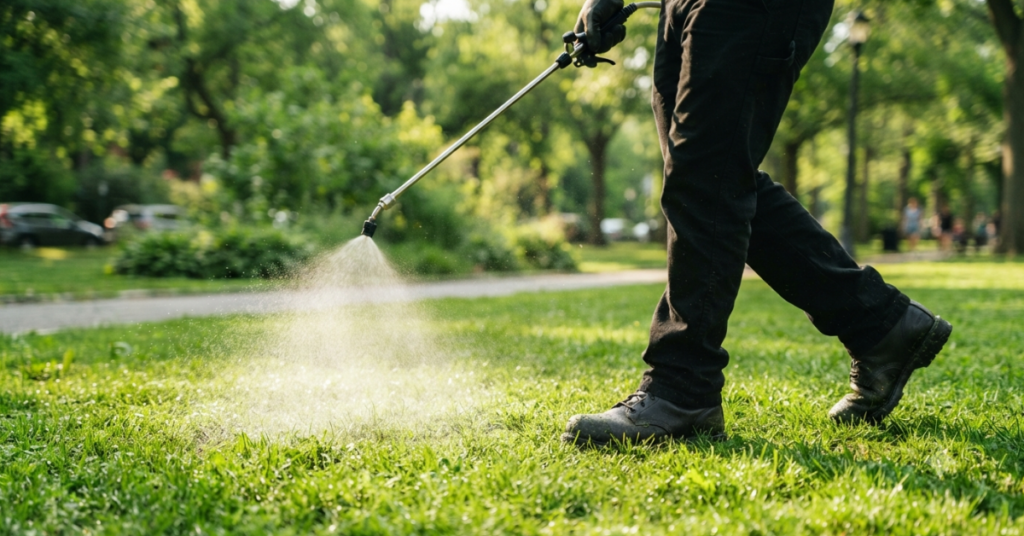
Liquid aeration uses a soil-conditioning solution designed to improve water movement and soil structure without removing soil plugs.
Instead of using specialized equipment to remove soil, lawn care professionals apply liquid aeration as a treatment across the lawn. These products typically contain ingredients that improve the soil’s ability to absorb water and support healthier root growth over time.
Some homeowners choose liquid aeration because the application is quick and doesn’t leave visible soil plugs on the lawn. Many homeowners also include it as part of a broader lawn care program to support soil health throughout the growing season.
Because liquid aeration works below the surface, the soil responds gradually to the treatment. Factors such as soil type, the level of compaction, and the overall condition of the lawn all influence the results.
What Is the Difference Between Core Aeration and Liquid Aeration?
Core aeration physically removes plugs of compacted soil, while liquid aeration uses a soil-conditioning solution to improve water movement and soil structure. Both methods support healthier grass, but they achieve that goal in very different ways.
| Core Aeration | Liquid Aeration |
| Removes plugs of soil from the lawn | Applies a liquid soil-conditioning treatment |
| Physically relieves soil compaction | Does not remove compacted soil |
| Creates openings that allow water, oxygen, and nutrients to reach the roots | Aims to improve water movement and soil structure over time |
| Leaves small soil plugs on the lawn that naturally break down | Leaves no visible soil plugs after application |
| Commonly recommended for compacted lawns and clay soils | May be used as part of an ongoing soil health program |
Both methods contribute to a healthier lawn, and the right choice depends on your lawn’s condition and your goals.
Because Middle Tennessee lawns often contain dense clay soils that become compacted over time, Puryear Farms recommends core aeration as the preferred solution for improving growing conditions and supporting long-term lawn health.

Why Does Puryear Farms Recommend Core Aeration?
Puryear Farms recommends core aeration because it physically relieves soil compaction and delivers consistent results for the clay-heavy soils commonly found throughout Middle Tennessee.
Dense clay soils naturally compact over time, making it more difficult for lawns to develop strong root systems. Core aeration has remained a trusted solution for decades because it creates the space roots need to access water, oxygen, and nutrients more effectively.
For these reasons, Puryear Farms recommends core aeration because it:
- Builds a stronger foundation for healthy grass with a proven solution for Middle Tennessee’s clay-heavy soils.
- Helps your lawn make better use of water and nutrients by creating healthier growing conditions below the surface.
- Creates the ideal conditions for overseeding and fall fertilization so your lawn can establish stronger growth.
- Supports long-term lawn health by encouraging stronger root development year after year.
If you’re looking for a more comprehensive approach to improving your lawn, learn how turf rejuvenation combines core aeration with other services to restore long-term lawn health.
While liquid aeration may be an appropriate option in some situations, Puryear Farms has chosen to specialize in core aeration because it has consistently delivered the best results for the lawns we care for across Middle Tennessee.
Is Lawn Aeration Necessary?
Lawn aeration is necessary when compacted soil prevents water, oxygen, and nutrients from reaching grass roots.
Not every property needs annual aeration, but many in Middle Tennessee benefit from it because the region’s dense clay soil compacts easily. Regular foot traffic, mowing, and even heavy rainfall can make compaction worse over time.
Your lawn may benefit from core aeration if you notice:
- Hard soil that is difficult to penetrate with a shovel or screwdriver
- Water pooling or running off instead of soaking into the ground
- Thin, patchy, or struggling grass
- Areas that receive frequent foot traffic from children, pets, or outdoor activities
- Slow growth despite regular watering and fertilization
When soil becomes compacted, improving the lawn from the surface becomes more difficult because water and nutrients can’t easily reach the root system. Aeration helps restore the conditions grass needs to develop deeper, healthier roots and make better use of rainfall and fertilizer.
Annual core aeration plays an important role in a long-term lawn care program. By relieving compaction before it becomes severe, you can help maintain healthier soil structure and support stronger turf year after year.
If you’re unsure whether compaction is the only issue affecting your lawn, soil testing can help identify nutrient deficiencies, pH imbalances, and other factors that may be limiting healthy growth.
When Is the Best Time to Schedule Core Aeration?
Fall is typically the best time to schedule core aeration in Middle Tennessee because cooler temperatures and active root growth help lawns recover and develop stronger root systems.
As summer temperatures begin to cool, grass can focus more energy on establishing healthy roots instead of surviving heat and drought stress. Aerating in the fall also creates ideal growing conditions before winter dormancy, giving your lawn a stronger foundation for the following spring.
For the best results, core aeration is often paired with other fall lawn care services, including:
- Overseeding: The openings created during aeration improve seed-to-soil contact, helping new grass seed establish more successfully.
- Fall fertilization: Aeration allows fertilizer to move deeper into the soil, where nutrients can reach the root zone more effectively.
Because fall is one of the busiest seasons for lawn care, scheduling your core aeration early helps you take advantage of ideal growing conditions. It also gives you enough time to complete overseeding and fall fertilization before the season changes.
Give Your Lawn the Stronger Foundation It Needs
A healthy lawn starts below the surface. If compacted soil is limiting your lawn’s growth, core aeration creates better conditions for stronger roots, improved water absorption, and healthier grass over the long term.
Whether your lawn has hard soil, thinning turf, or hasn’t responded to regular watering and fertilization, the team at Puryear Farms can evaluate your property and recommend the right turf health solutions for your lawn.

Frequently Asked Questions
Is core aeration better than liquid aeration?
Core aeration is the better choice for lawns with compacted soil because it physically removes plugs of soil, allowing water, oxygen, and nutrients to reach the root zone. Liquid aeration may be appropriate in some situations, but it does not mechanically relieve soil compaction.
Is lawn aeration necessary every year?
Many Middle Tennessee lawns benefit from annual core aeration because the region’s clay soils compact easily. The ideal schedule depends on your soil conditions, lawn use, and overall turf health.
Will core aeration damage my lawn?
No. Core aeration does not damage a healthy lawn. The small soil plugs left on the surface naturally break down within a few weeks, returning organic matter to the soil while the openings help improve root growth and water infiltration.
When is the best time to aerate a lawn in Middle Tennessee?
Fall is typically the best time to aerate a lawn in Middle Tennessee. Cooler temperatures and active root growth help the lawn recover quickly, and aeration can be paired with overseeding and fall fertilization for even better results.
How much does core aeration cost?
Core aeration cost varies based on factors such as the size of your lawn and whether you combine the service with overseeding or fertilization. Contact Puryear Farms for a customized estimate based on your property’s needs.