
If you manage a commercial property in Tennessee, your irrigation system is one of the parts of your landscape operation you have the most control over. Dial it in and you get lower water bills, healthier plants and turf, and fewer emergency service calls. Leave it on autopilot and it costs you in every one of those categories at once.
The three options you’re most likely hearing about are drip, spray, and smart irrigation. Each one is a different tool for a different job on your site. The goal of this guide is to break down what each system actually is, what it does well, and how to tell whether your current setup is working as hard as it should be for what you’re spending.
Drip, Spray, and Smart Irrigation in Plain English
Before comparing performance, here’s what each system actually is:
- Drip irrigation delivers water slowly and directly to the base of plants through low-flow tubing and emitters. Best for planting beds, annuals, and confined areas where the goal is getting water to roots without wetting foliage.
- Spray irrigation is the traditional sprinkler setup: pop-up heads and rotors covering turf areas with overlapping spray patterns. Still the right call for sod and open green spaces.
- Smart irrigation controllers are the brain that runs any of the above. They adjust watering schedules automatically based on local weather, flow data, and zone-specific conditions. The upgrade that makes every other component work better.
Most commercial sites need a blend of at least two of these systems, with a smart controller tying it all together. The rest of this guide walks through where each one shines, what it costs to get the mix wrong, and how to tell whether your irrigation budget is being spent in the right places.
The Biggest Commercial Irrigation Mistake We See
If we could fix one thing about how commercial property owners approach irrigation, it would be this: more water is not better.
Overwatering masks problems instead of fixing them. It drives up your water bill, encourages disease in heat-stressed plants, and sets up bigger issues down the road. Root rot, fungal growth, and failing turf can all hide under a landscape that looks fine on the surface until it suddenly doesn’t. Most of the commercial clients we work with don’t have an equipment problem. They have a zoning and management problem. The fix is controlled, uniform, plant-appropriate watering, delivered the right way at the right time.
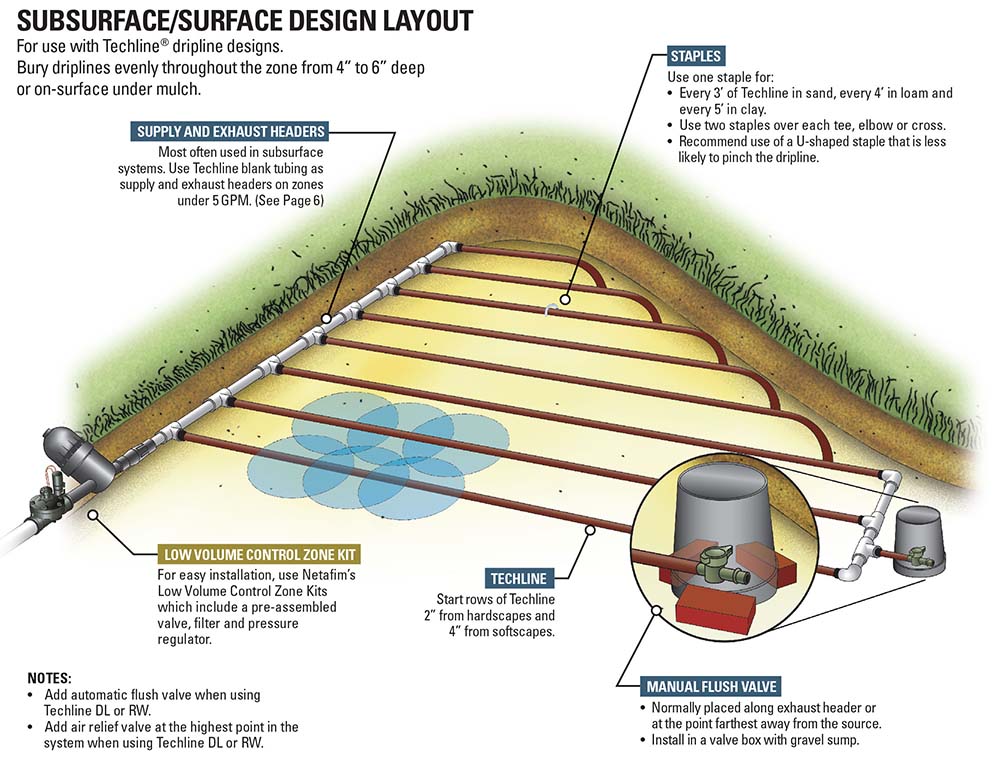
Drip Irrigation for Tennessee Commercial Landscapes
Drip irrigation is a strong fit for the parts of a commercial landscape that need gentle, targeted water. Think planting beds, hanging baskets, foundation plantings, and any confined area where overspray would be wasted.
In the middle of a Tennessee summer, drip is much more forgiving than spray. It emits water slowly at the root zone, which gives our clay-heavy soils time to absorb it without runoff. Just as importantly, drip keeps foliage dry. Wet leaves in 95-degree heat are a recipe for scorching and disease, and drip sidesteps that entirely.
Drip shines in:
- Landscape beds and foundation plantings
- Annual rotations and confined planting pockets
- Any area that can be gradually weaned off irrigation once plants are established and rooted in
Where drip gets tricky is durability and diagnostics. Drip lines clog over time. They degrade in UV exposure. They have a tendency to “float” above mulch, which doesn’t look great. The biggest issue is that you often don’t know something’s wrong until plants start looking dry, and by then you’ve already lost ground. Service calls on drip can be expensive because tracking down a clogged emitter or a slow leak takes time.
The fix for that blind spot is pairing drip with a smart controller that has flow sensing. More on that below.
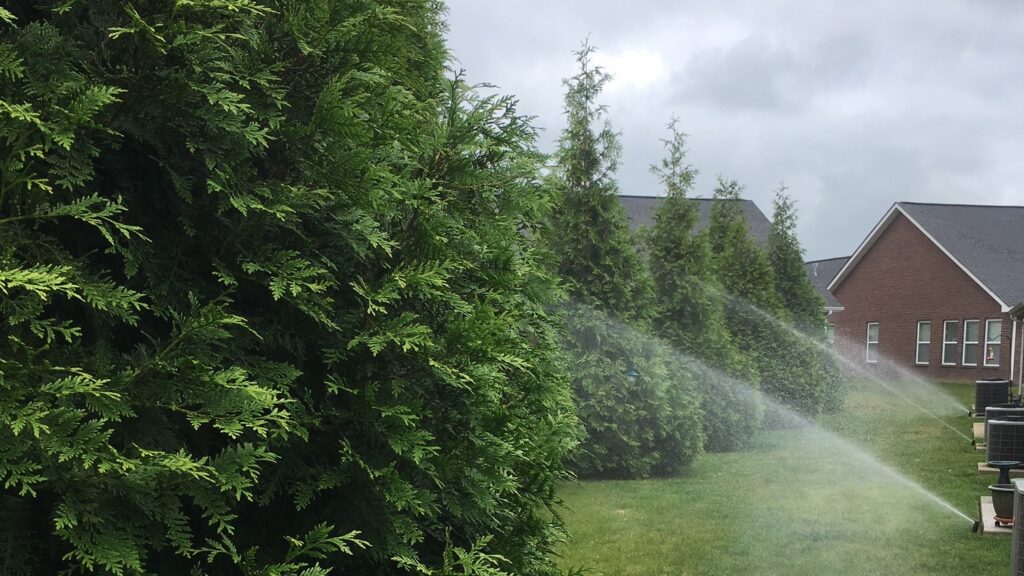
Spray Irrigation for Commercial Turf Areas
Spray irrigation is what most people picture when they hear “sprinkler system,” and it’s still the right tool for commercial turf.
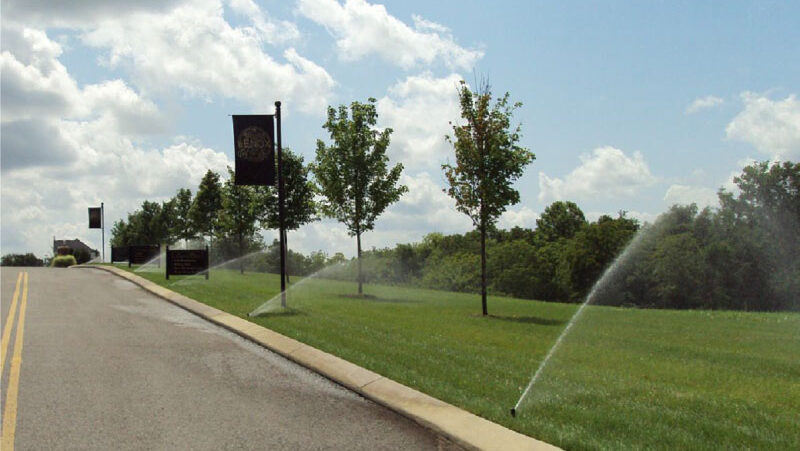
Sod areas should always have matched precipitation spray irrigation with arc-to-arc coverage. That means every head on a zone puts down water at the same rate, and the spray patterns overlap cleanly. Done right, this is how you get even, healthy turf. Done wrong, you get the telltale commercial-property mistakes: water marks on the road, brown patches next to soaked ones, overwatered spots turning yellow next to underwatered ones turning brown.
The single most common irrigation mistake we see on commercial sites is combining spray heads and rotor heads on the same zone. It might shave a few hundred dollars off the install, but the repair bill to re-zone it later is significantly higher, and it usually comes with the added cost of replacing sod that’s been over- or underwatered for a full season.
Timing matters too. We want spray zones running in the early morning so water hits the soil, gets absorbed, and evaporates off the leaves before the sun is doing real damage. For a deeper look at how irrigation fits into a broader turf care strategy, see our guide on commercial turf health care for Gallatin, TN property managers.
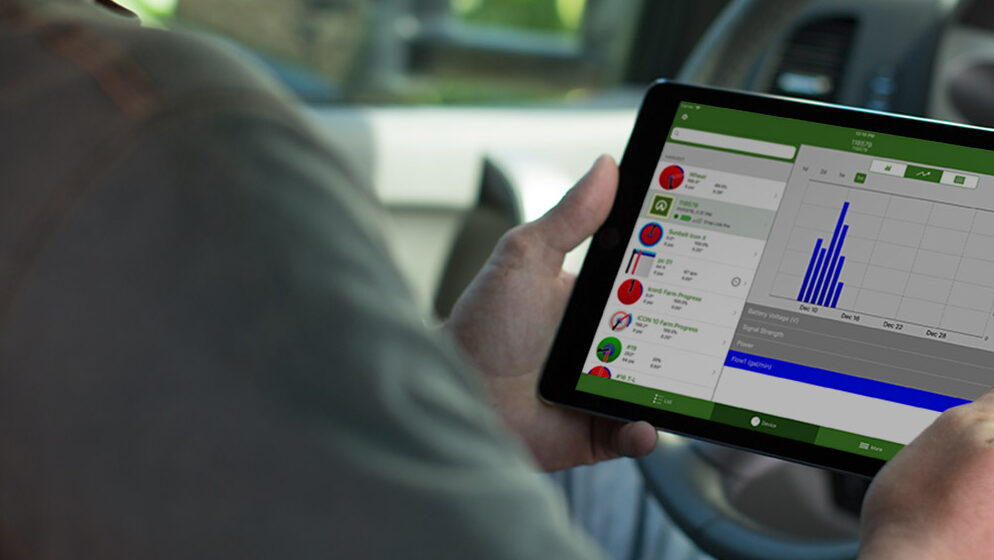
Smart Irrigation Controllers for Commercial Properties
This is the piece most commercial properties in our region are missing. And it’s the piece that makes everything else work better.
Smart controllers let us dial in settings remotely and adjust for real conditions, including this week’s weather, this specific microclimate, and this individual zone. Your plants get the amount of water they actually need based on what’s happening outside, not what someone programmed into a controller six months ago. Better for the plants. Better for the water bill.
The features that actually matter for commercial use:
- Remote access and adjustment. We can tune runtimes from anywhere, no site visit required.
- Local weather data integration. The best systems pull from the nearest weather station so your schedule reflects your microclimate.
- Flow sensing. This is how you catch leaks early, especially on drip zones where you’d otherwise find out by looking at dying plants.
- Zone stacking and runtime optimization. The controller automatically sequences zones to maximize flow and keep watering inside the optimal window.
Two systems we install and recommend often:
Hunter EZ Decoder (2-wire) systems are a great fit for small to medium commercial sites. Two-wire technology has been around since the late ’70s, but it didn’t really take off in commercial irrigation until the mid-2000s. It’s a game-changer. All the valves connect to a shared pair of wires through decoders, and the controller turns them on and off individually. That means fewer wires in the ground (fewer things to break), the flexibility to add zones later, and the ability to put the controller wherever it makes sense on the site.
WeatherTrak Optiflow is what we reach for on larger, more complex commercial sites. It’s the Cadillac of the controller world. It auto-programs runtimes, stacks zones for flow efficiency, pulls microclimate weather data, and can manage up to four backflows off a single controller.
Hunter’s Hydrawise platform is another strong option from the same manufacturer, and there are other solid systems on the market, including Weathermatic. Controller brand largely comes down to preference and what fits the property. What matters most is that your commercial site has a smart brain managing it.
Commercial Smart Irrigation Case Study: A Neighborhood Upgrade
One of the best projects we’ve taken on was for a neighborhood where every home had its own individual set of wires running back to the controller. The result was a massive cord of wires that was an absolute nightmare to troubleshoot. Broken wires everywhere, and half the time we couldn’t even find where the wires were.
We pitched an upgrade to a WeatherTrak Optiflow system with a 2-wire setup. The difference was exponential:
- Troubleshooting time dropped dramatically.
- The controller started managing their pump more efficiently, keeping it in the flow range where it actually lasts.
- Smart zone stacking pushed all watering into the optimal overnight window instead of daytime runs.
- Automatic leak detection could shut the system down in case of a major break before water damage compounded.
Same site, same plants, totally different outcome, just because the brain of the system got an upgrade.
Choosing the Right Irrigation System for Your Commercial Property
Different commercial landscape types call for different strategies:
HOAs and residential communities. Usually hybrid: matched spray for common-area sod, drip in amenity beds and entry plantings, smart control managing all of it.
Retail and office parks. High-visibility turf gets prioritized with targeted spray and optimal morning timing. Planter beds and landscaped islands are almost always better on drip. Smart control is non-negotiable for anything this visible.
Any high-impact area. We prioritize these with targeted spray irrigation and put them first in the morning schedule so the soil gets fully watered and the foliage dries before the day gets hot.
The goal is to build a system that meets the site’s actual needs without loading it up with ongoing maintenance cost.
What Commercial Irrigation Maintenance Should Cover
A commercial irrigation system is an asset. Treating it like a set-and-forget install is how you end up with surprise repair bills, plant loss, and water bills that creep up every year.
Our irrigation service contracts cover the essentials:
- Service checks during peak summer to confirm every zone is running correctly when the heat is doing real damage.
- Winter shutdown and blowout. This is the single most important maintenance task. Water left in lines cracks pipes when freezing weather hits, and Tennessee winters are more than cold enough to cause that damage.
- Spring startup before the heat hits. Catching repairs in April is dramatically cheaper than catching them in July when plants are already stressed.
If you’re pairing drip with a smart controller and flow sensing, your long-term maintenance cost drops substantially because leaks and failures get caught before they turn into dead plants and emergency service calls.
Signs Your Commercial Irrigation System Needs an Upgrade
Without a smart controller, most commercial properties find out something’s broken when plants start turning brown, which means you’ve already lost time and probably some vegetation. A smart controller will tell you exactly where the problem is: a failing solenoid, a cut wire, or a broken head. Less diagnostic time on-site means a smaller service bill and less damage to the landscape.
If you’re guessing at your current system’s performance, or only hearing from your irrigation contractor when something’s already visibly wrong, you’re likely overdue for an upgrade. For more on what to look out for, check our breakdown of the top signs of irrigation issues for Sumner County property owners. The principles apply to commercial sites too, just amplified by scale.
Getting Commercial Irrigation Right
When we install a system, we do it as if we’ll be the ones maintaining it for the next 10 years. Because most of the time, we are. That shifts the design conversation from “what’s cheapest right now” to “what’s going to perform, hold up, and stay efficient.”
Drip, spray, and smart irrigation are tools that do different jobs on a commercial site. A well-designed commercial irrigation system uses all three, sized and zoned to the actual site, with a smart controller making sure every drop of water lands where it should at the right time.
Irrigation doesn’t have to be irritating if it’s done right.
Commercial Irrigation Systems at a Glance
Here’s a quick side-by-side of what each system does well and where to watch your step:
| System | Best For | Key Strengths | Watch-Outs | Maintenance Needs |
|---|---|---|---|---|
| Drip Irrigation
|
Planting beds, annuals, foundation plantings, and confined areas
|
Gentle root-zone watering; no foliage wetting (reduces scorch and disease risk); slow absorption works well in clay soil
|
Clogging, UV degradation, and “floating” above mulch; leaks often go undetected until plants look stressed
|
Higher diagnostic effort on its own; pair with flow sensing for early leak detection
|
| Spray Irrigation
|
Sod, open turf areas, and high-visibility green spaces
|
Even coverage across large areas; proven and familiar; ideal for matched precipitation with arc-to-arc design
|
Wets foliage (disease risk in heat); mixing spray and rotor heads on one zone wastes water and shortens system life
|
Regular service checks; head adjustments and replacements over time
|
| Smart Controllers
|
Any commercial site; works with both drip and spray
|
Adjusts schedules by weather, flow, and zone; remote access; catches leaks early; optimizes runtimes
|
Higher upfront investment than basic controllers; initial setup and programming required
|
Low ongoing maintenance once dialed in; long-term savings on water and repairs
|
Stay on Top of Commercial Landscape Tips
Want more practical insights on irrigation, turf health, and commercial landscape maintenance in our region? Subscribe to the Puryear Farms newsletter for seasonal tips, maintenance reminders, and expert advice from our team, delivered straight to your inbox.

Frequently Asked Questions
What’s the best irrigation system for commercial landscapes in Tennessee? The best system is almost always a hybrid. Drip in beds and confined plantings, spray in turf areas, and a smart controller managing both. There’s no single “best” system that fits every commercial site. The right setup matches the specific plants, soil, and layout of your property.
Is drip irrigation better than spray irrigation in summer heat? For planting beds and foundation areas, yes. Drip targets the root zone and keeps foliage dry, which reduces disease risk and scorching during peak summer heat. For turf and sod areas, matched precipitation spray is still the right answer.
Are smart irrigation controllers worth the investment for commercial properties? Yes. Smart controllers reduce water bills, catch leaks before they damage the landscape, and let irrigation techs diagnose issues remotely. For medium and large commercial sites, the long-term savings on water, repairs, and plant replacement typically more than justify the upfront cost.
How often does a commercial irrigation system need professional maintenance? At minimum, a commercial system needs a spring startup, peak-summer service checks, and a proper winter shutdown with line blowouts. Skipping winterization is one of the most expensive mistakes a commercial property can make, because trapped water cracks pipes when freezing weather hits.
What are the signs my commercial irrigation system needs to be upgraded? If you only find out about problems when plants turn brown, if you’re paying for repeated wire and zone repairs, if your water bill keeps climbing, or if you don’t have remote visibility into system performance, it’s time to look at an upgrade. A smart controller with flow sensing typically pays for itself in avoided repairs and reduced water usage.