
The best way to prune commercial landscape plants in summer is to match your pruning schedule to the plant’s growth and bloom cycle rather than pruning everything at the same time. Knowing how to prune landscape plants is important, but timing often matters just as much as technique.
In Tennessee, where long growing seasons and hot, humid summers influence how plants respond to pruning, making cuts at the wrong time can remove next year’s blooms, stress plants during peak heat, and create avoidable maintenance issues.
In this guide, you’ll learn which plants can handle summer pruning, which plants should be left alone, and how summer property walkthroughs can help you plan dormant-season maintenance more effectively.
When and How to Prune a Plant in Summer
The easiest way to determine when and how to prune a plant is to identify when it blooms.
Most pruning mistakes happen when you cut plants at the wrong time of year. If you understand a plant’s bloom cycle, you can determine whether summer pruning is appropriate.
As a general rule, plants that bloom before May set their flower buds during the previous growing season. Summer pruning removes those buds and reduces or eliminates next year’s flowers.
Plants that bloom after May typically produce flowers on new growth. These plants are generally more tolerant of summer pruning and dormant-season pruning.
| If the Plant Blooms… | It Produces Buds On… | Summer Pruning? |
| Before May | Old wood (previous year’s growth) | Usually no |
| After May | New growth (current season) | Often yes, depending on species |
This rule won’t answer every pruning question, but it prevents many of the most common mistakes made in commercial landscapes across Middle Tennessee.
If your maintenance team can’t identify the plant species or determine when it blooms, the safest approach is to leave it alone until the plant can be properly identified. Replacing a missed pruning cycle is easier and less expensive than replacing a damaged shrub.
Which Plants Can Handle Summer Pruning?
Many evergreen hedges and summer-blooming shrubs can handle light summer pruning without affecting their long-term health or flowering performance.
Landscape teams across Middle Tennessee use summer pruning to maintain appearance, manage growth, and keep planting beds looking professional throughout the growing season.
The key is understanding the difference between light maintenance pruning and major structural pruning.
- Light maintenance pruning: Minor shaping, controlling growth, and removing small amounts of foliage.
- Major structural pruning: Removing large branches, reducing plant size, or correcting growth patterns.
Most plants benefit from light shaping during summer, while crews should save major structural pruning for the dormant season.
How to Prune Evergreens and Hedges in Summer
Most evergreen hedges tolerate light summer pruning, but the amount and timing of pruning vary by species.
Boxwood, holly, arborvitae, nandina, and other common foundation plantings don’t all respond the same way to summer pruning. The guidelines below can help you determine the best approach for each plant.
| Plant | Summer Pruning Guidance |
| Boxwood | Light shaping is acceptable. Avoid hard cuts into older wood. |
| Holly | Tolerates light summer pruning to maintain shape and size. |
| Japanese Holly | Can be lightly pruned during the growing season. |
| Yaupon Holly | Responds well to selective summer pruning. |
| Arborvitae | Light pruning is acceptable in June and July. Avoid pruning in late summer. |
| Nandina | Remove individual canes selectively rather than shearing the plant. |
| Privet | Can be pruned during summer to maintain a formal appearance. |
How to Prune Summer-Blooming Shrubs
Prune summer-blooming shrubs with light shaping and deadheading during the growing season, and save major structural pruning for late winter.
Many summer-blooming shrubs produce flowers on new growth, which makes them more tolerant of summer pruning than many spring-flowering plants.
| Plant | Summer Pruning Guidance |
| Crape Myrtle | Light pruning and deadheading are acceptable after bloom cycles. |
| Rose of Sharon | Tolerates light maintenance pruning during summer. |
| Abelia | Can be lightly shaped as needed. |
| Vitex | Light pruning is acceptable during the growing season. |
| Butterfly Bush | Deadheading spent blooms encourages continued flowering. |
Many summer-blooming shrubs respond well to periodic deadheading throughout the growing season. Removing spent blooms helps maintain a cleaner appearance and encourages continued flowering on commercial properties.
Pruning Tip: Avoid pruning narrow-leaf evergreens such as arborvitae and other conifers in late summer or early fall. New growth produced that late in the season may not harden off before winter, increasing the risk of cold damage.
Which Plants Should Not Be Pruned During Summer?
Most spring-flowering shrubs and trees should not be pruned during summer because they have already developed the flower buds for next year’s blooms.
These plants typically set their flower buds during the previous growing season. While summer pruning may improve appearance temporarily, it often removes the buds responsible for next year’s flowers.
Which Spring-Flowering Shrubs and Trees Should Not Be Pruned in Summer?
Azaleas, forsythia, rhododendrons, weigela, dogwoods, and redbuds are among the most common spring-flowering plants that you should not prune during summer.
If the ideal post-bloom pruning window has already passed, it’s better to wait until the following year. These plants develop flower buds well before the next blooming season, so summer pruning often reduces the flowers they produce the following spring.
- Azalea: Do not prune in summer. Pruning removes flower buds for next spring.
- Forsythia: Wait until immediately after spring flowering to prune.
- Bridal Wreath Spirea: Avoid summer pruning to preserve next year’s blooms.
- Rhododendron: Prune only after flowering if needed.
- Weigela: Summer pruning removes developing flower buds.
- Dogwood: Avoid unnecessary summer pruning.
- Redbud: Save non-essential pruning for the dormant season.
For commercial properties across Middle Tennessee, azaleas are often the plant most affected by improper summer pruning. A hedge that looks neatly trimmed in July may produce very few blooms the following spring.
How Should You Prune Different Types of Hydrangeas?
Different hydrangea varieties require different pruning schedules, and some should not be pruned during summer at all.
Hydrangeas often create confusion because pruning recommendations vary by variety. While some hydrangeas can tolerate light deadheading during the growing season, others can lose next year’s blooms if pruned at the wrong time.
- Bigleaf (Mophead): Do not prune during summer. These hydrangeas develop blooms on old wood, and summer pruning removes future flower buds.
- Oakleaf: Avoid summer pruning. Although oakleaf hydrangeas bloom during summer, they also produce flowers on old wood. Oakleaf hydrangeas are especially common in Tennessee landscapes.
- Panicle (Limelight): Save major pruning for late winter. Light deadheading is acceptable during summer.
- Smooth (Annabelle): Perform major pruning in late winter. Light deadheading is acceptable during the growing season.
If your maintenance team cannot confidently identify the hydrangea variety, leave it alone until it can be properly identified. Waiting to prune is usually a safer choice than removing next year’s blooms by mistake.
What Are the Dos of Summer Pruning?
The most important summer pruning practices are removing dead or damaged branches, making clean cuts, using sharp tools, and avoiding unnecessary stress on plants.
Whether you’re maintaining office parks, healthcare facilities, HOAs, or retail properties, following these pruning tips can help protect the long-term health and appearance of your landscape.
- Remove dead, damaged, or diseased wood at any time. Eliminating damaged branches improves appearance, reduces safety risks, and helps prevent the spread of disease.
- Prune during the cooler parts of the day. Early morning pruning reduces stress on plants and gives cuts time to begin healing before temperatures peak.
- Make cuts just outside the branch collar. The branch collar contains specialized tissue that helps plants seal wounds more effectively. Avoid leaving stubs behind.
- Follow the one-third rule. Remove no more than one-third of a plant’s foliage during a single pruning cycle. Excessive pruning can slow recovery and increase stress.
- Use sharp, clean tools. Sharp blades create cleaner cuts that heal faster and reduce opportunities for pests and diseases to enter the plant.
- Monitor plants after pruning. Tennessee’s summer heat can be demanding on landscape plants. Watch for signs of stress, including wilting, leaf scorch, or excessive dieback.
Summer pruning works best when the goal is to support plant health rather than dramatically change a plant’s size or shape. Following these best practices helps you maintain a professional appearance while reducing stress on plants during Tennessee’s hottest months.
What Are the Don’ts of Summer Pruning?
The most important summer pruning mistakes to avoid are hard pruning during extreme heat, pruning the wrong plants at the wrong time, and removing more growth than a plant can safely recover from.
Many pruning problems aren’t caused by the cut itself. They happen when crews prune during stressful conditions, use improper techniques, or remove too much foliage at once. Avoiding the following mistakes can help protect plant health and reduce long-term maintenance issues.
- Don’t perform hard pruning during a heat wave. Removing large amounts of foliage during periods of extreme heat can increase stress and slow recovery.
- Don’t top trees. Topping removes large portions of a tree’s canopy, creates weak regrowth, and increases the risk of decay and storm damage. It remains one of the most harmful pruning practices used in commercial landscapes.
- Don’t prune oak trees during mid-summer. Fresh pruning cuts can attract insects that spread disease. If oak pruning is necessary, consult a qualified arborist about the safest timing for your area.
- Don’t prune spring-flowering shrubs during summer. Azaleas, forsythia, rhododendrons, and other spring bloomers have already developed the buds for next year’s flowers. Summer pruning removes those blooms before they have a chance to open.
- Don’t use dull pruning tools. Dull blades tear plant tissue instead of making clean cuts. These wounds take longer to heal and create opportunities for pests and diseases to enter the plant.
- Don’t remove too much growth at one time. Over-pruning can trigger stress, weak regrowth, and poor plant performance. When significant reduction is needed, a phased approach is usually safer than aggressive pruning.
Many costly pruning mistakes happen because crews try to solve a problem quickly instead of following the plant’s natural growth cycle.
Taking a more measured approach can help commercial landscapes maintain their appearance while reducing stress, disease risk, and unnecessary plant replacement costs.
Why Should You Sanitize Pruning Equipment?
You should sanitize pruning equipment because it prevents diseases from spreading from one plant to another.
This becomes especially important during Tennessee’s hot, humid summers, when fungal and bacterial diseases are often most active. A contaminated pruning blade can spread problems such as fire blight, crown gall, and other pathogens throughout a landscape without crews realizing it.
For most commercial landscape maintenance, a solution containing at least 70% isopropyl alcohol is the preferred option because it works quickly and is less corrosive than bleach. Diluted bleach solutions can also be effective, but tools should be rinsed afterward to help prevent corrosion.
When working in areas with known disease pressure, sanitize tools between plants. At a minimum, crews should disinfect pruning equipment before moving between properties.
Just as important, keep blades sharp. Clean, sharp blades create smoother cuts that heal faster and reduce opportunities for pests and diseases to enter the plant.
How Can Summer Walkthroughs Improve Winter Landscape Planning?
Summer walkthroughs improve winter landscape planning by helping property managers identify pruning needs, plant replacements, and landscape problems before dormant-season work begins.
Many pruning and replacement decisions are easier to make during summer when plants are fully leafed out, and signs of stress are easier to spot.
Rather than treating summer visits as routine maintenance only, use them to build a plan for dormant-season pruning, plant replacements, and future landscape improvements.
What Needs Dormant Pruning?
Trees with structural issues, overgrown shrubs, and plants that require significant size reduction should be flagged for dormant-season pruning.
Look for:
- Crossing or rubbing branches
- Overgrown shrubs that have outgrown their space
- Trees that need structural pruning
- Plants that require significant size reduction
Document these areas during summer and schedule corrective pruning when plants are dormant. Dormant-season pruning often creates less stress on plants and allows crews to see branch structure more clearly.
What Needs Removal in the Next One to Two Seasons?
Declining plants, overcrowded beds, and species that have outgrown their space are often the best candidates for future removal.
As you walk the property, look for:
- Declining shrubs with thinning foliage
- Plants that consistently struggle in their location
- Overcrowded planting beds
- Species that have outgrown the available space
Many commercial properties across Middle Tennessee contain mature landscapes that have evolved over time.
Identifying problem plants early allows property managers to budget for replacements and discuss long-term improvements before a failure becomes an emergency.
What Pests and Diseases Should You Monitor?
Bagworms, spider mites, powdery mildew, and fire blight are among the most common landscape issues to monitor during Tennessee summers.
| Pest or Disease | Commonly Affects | When to Watch |
| Bagworms | Arborvitae, juniper, other evergreens | June-August |
| Spider Mites | Boxwood, juniper | Hot, dry periods |
| Powdery Mildew | Dogwood, crape myrtle | Humid weather |
| Fire Blight | Ornamental pear, crabapple | Throughout the growing season |
Summer walkthroughs provide an opportunity to move from reactive maintenance to proactive planning.
By documenting pruning needs, replacement candidates, and potential pest or disease issues, property managers can build a more effective winter work plan and reduce costly surprises throughout the year.

Frequently Asked Questions
Can you prune trees in the summer?
Yes, you can prune certain trees during summer, but the type of pruning matters. Removing dead, damaged, or hazardous branches is generally acceptable, while major structural pruning is often better performed during the dormant season. Avoid pruning oak trees during mid-summer unless necessary, as fresh cuts can attract insects that spread disease.
When should you not prune shrubs?
You should avoid pruning shrubs when they are developing next year’s flower buds, during periods of extreme heat, or when the plant is already under stress. Many spring-flowering shrubs, including azaleas, forsythia, and rhododendrons, should not be pruned during summer because doing so removes future blooms.
What plants should not be pruned in summer in Tennessee?
Several common Tennessee landscape plants should not be pruned during summer, including azaleas, forsythia, bridal wreath spirea, rhododendrons, weigela, dogwoods, and redbuds. Bigleaf and oakleaf hydrangeas should also be left alone because they bloom on old wood and develop future flower buds before the next growing season.
How do you sanitize pruning tools?
Sanitize pruning tools with a solution containing at least 70% isopropyl alcohol or a diluted bleach solution. Clean tools between plants when working around disease issues and disinfect them before moving between properties to help prevent the spread of fungal and bacterial diseases.
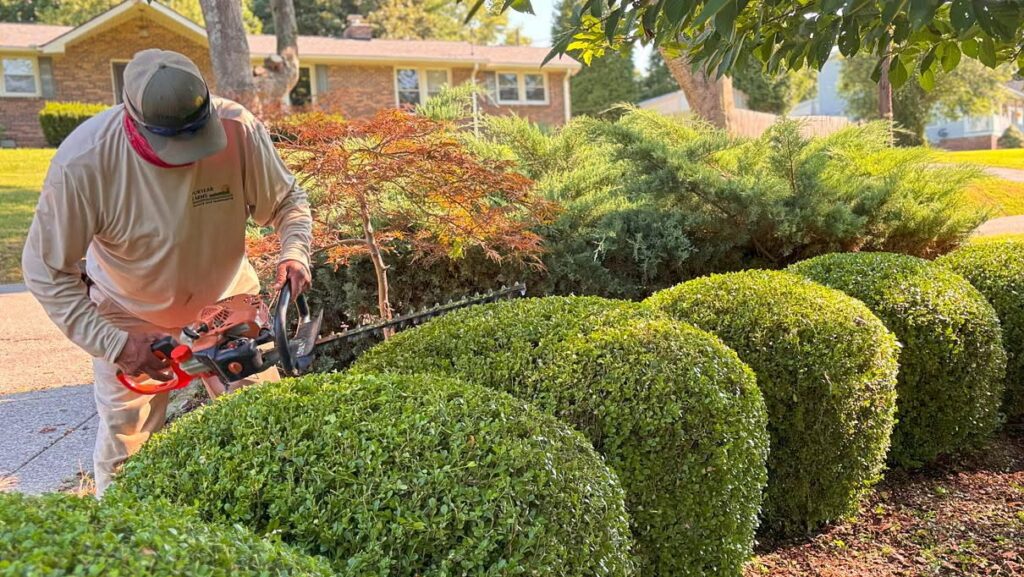
Smart Summer Pruning Protects Commercial Landscapes
Knowing how to prune commercial landscape plants starts with knowing which plants need attention and which plants should be left alone. In many cases, avoiding the wrong cut is just as important as making the right one.
For commercial properties across Middle Tennessee, summer pruning should focus on maintaining plant health, preserving appearance, and identifying opportunities for future landscape improvements.
A thoughtful summer walkthrough can help you plan dormant-season pruning, budget for plant replacements, and address potential issues before they become larger problems.
If you’re evaluating the health of your commercial landscape or planning winter pruning work, explore our Grounds Maintenance Services or contact Puryear Farms for a property assessment and long-term maintenance plan.